
irrevocable family trust
The Irrevocable Family Trust: A Private Everlasting Covenant for Your Family
An irrevocable family trust is a trust that, once signed and funded, cannot be cancelled or rewritten by anyone.
An irrevocable family trust is a trust that, once signed and funded, cannot be cancelled or rewritten by anyone. The founding Settlors transfer the family assets into the trust now and manage them as trustees for the benefit of the family, often for generations. That permanence is what allows features like spendthrift provisions and long duration, up to 1,000 years. The Spacious Place's Family Legacy Trust is an irrevocable family trust written specifically for everyday families, not the ultra-high net worth, done for you in thirty days.
"The gifts and calling of God are irrevocable." — Romans 11:29
What "irrevocable" really means
The world loves to sell you a revocable trust. That is because, as the name suggests, a revocable trust is easy to revoke and unwind. In a revocable trust, the creator keeps the right to change everything or take everything back. It behaves, in most respects, like the person's own property, making it easy for creditors, lawsuits, taxing agencies, and other outside parties to get to the property. Even if the creator “doesn’t want” to revoke it, he can be forced to under pressure.
In an irrevocable trust, the creator (the Settlor or Grantor) makes a lasting decision: these assets now belong to the family's trust. The trust has its own identity, often its own EIN, and its trustees owe duties to its beneficiaries. That separation is the source of both its strength and its seriousness. Irrevocable assignment language is written to make the family's intent ironclad.
Irrevocable does not mean rigid or unable to be amended. Well-drafted trusts often include: - A trust protector (or a board of sacred family stewards) with defined powers to adjust administrative terms or move the trust's situs. - Decanting authority that enables the trust protector to pour assets into a new trust with updated terms. - Directed-trust provisions that let named advisors guide investment or distribution decisions. Provisions like these give the family maximum protection and generational succession, while still maintaining flexibility to amend the trust as needed over time.
Why families choose irrevocable
There are some things in life that aren’t meant to be serious or last forever. For something as significant and sacred as your family name, ancestral legacy, lineal continuance, and generational wealth preservation and growth, an irrevocable trust is the only way to go.
The Bible says the only way to establish generational family dominion, freedom, self-governance, and holistic abundant prosperity is through a perpetual covenant.
“Come and let us join ourselves to the LORD in a perpetual covenant that will not be forgotten.” – Jeremiah 50:5
God’s covenants with families are always everlasting, and His gifts always irrevocable. Every family should establish its own irrevocable and perpetual Private Legacy Trust.
- Permanence. The family legacy or treasury is not undone by one bad year, one change of heart, or one generation's whims. Families are meant to last forever. An irrevocable trust helps secure that your family will always be.
- Long duration. Certain states like South Dakota and Wyoming have loosened their laws against perpetuities in favor of the Family Legacy Trust model, allowing trusts to last up to 1,000 years. This is what the Bible means by binding the enemy for a thousand years. The system is locked out of your private family affairs.
- Spendthrift provisions. A well drafted irrevocable trust restricts a beneficiary from being able to assign their interest in the trust principle or income, limiting creditors' reach. An ironclad Spendthrift clause seals out bad actors and thieves who would try to get to the family assets by going after its beneficiaries with unrighteous motives, and protects the family’s treasury and legacy assets from divorce proceedings.
- 100% discretionary distributions. Trustees decide what to distribute and when, according to the family's written principles, rather than handing out lump sums on a birthday. This adds protection to beneficiaries by preventing outsiders from being able to attach to a beneficiary’s guaranteed monthly distribution.
- Privacy and order. The trust document is a private family agreement, the family's own private law, and its ministration continues without interruption as family stewards change over the generations. No one ever has to step foot into a courtroom, no probate proceedings, no outside influence, no retitling of assets, no inheritance taxes. Everything stays in the family.
The important considerations
- You give up ownership (not control) of the assets. Family Settlors serve as trustees or advisors in many designs, acting as a fiduciary for the family, not as an owner. This aligns with the Biblical model of stewardship. To “Caesar,” you own nothing but control everything. Therefore, you owe nothing to Caesar.
- Creditor protection is not automatic. One advantage of an irrevocable trust over a revocable trust is the extra protection against creditors and personal lawsuits. If anyone sues you personally, there are no assets or income in your personal name to take from. But this protection is not automatic. If you are also a beneficiary of a trust you created, your own creditors may still reach it if the trust is not designed well with strong spendthrift protections. Transfers made to hide assets from existing creditors can be undone. Trust law deals with equity. “He who wishes to receive equity, must do equity.”
- Taxes depend on design. Depending on how it is designed, an irrevocable trust may be a "grantor trust" (income taxed to you) or a separate taxpayer. Gifts to the trust above the annual exclusion may require a gift tax return, even though very few families will ever owe federal gift or estate tax at today's $15 million per-person exemption. Jurisdiction matters. It is important to organize your trust in a jurisdiction with favorable tax laws to maximize wealth preservation.
- It calls for sacred stewardship. Separate accounts, records, and follow-through are part of the life of a trust. It is required in stewards that one be found faithful.
How you live now: funding the trust
A trust is a private vessel or container; funding it by moving assets into the trust fills it. Families typically move in: - Bank and brokerage accounts, retitled into the trust's name. - Business interests and LLC memberships, by written assignment. - Digital assets, often held through a Wyoming Digital Asset LLC owned by the trust (included in the Folio + LLC and the Dynasty Architecture provided by The Spacious Place). - Real estate, frequently through a private layer trust or an LLC owned by the trust. Before moving a home, check with your lender, county assessor, and insurer. Federal law (12 U.S.C. § 1701j-3) limits due-on-sale enforcement for certain transfers into a trust where the borrower remains a beneficiary, but transfers into an LLC are generally not covered, so talk with your lender first. - Retirement accounts, generally not retitled into a trust during life; a trust may be named as beneficiary instead, which has its own tax consequences. - All other personal property and assets, precious metals, cash, household property, equipment, and any heirloom property the family owns.

Permanence is not a promise in the document. It is the document.
Irrevocable family trust vs. revocable living trust
| Irrevocable Family (Legacy) Trust | Revocable living trust | |
|---|---|---|
| Can it be cancelled or revoked? | No. Amendable through provisions drafted in (protector, decanting) | Yes, at any time |
| Who owns the assets? | The trust, for the family | Effectively the creator |
| Designed duration | Multi-generational, up to 1,000 years | Usually distributes within one generation |
| Creator's creditors during life | May be limited in specific, qualifying designs; not guaranteed | Generally reachable, no protection |
| Spendthrift protection for heirs | Yes, where drafted | Possible, but only after the creator's lifetime |
| Income tax | Depends on jurisdiction. Best jurisdictions have no income tax. | Taxed to the creator |
| Paperwork | Trust uses its own EIN, separate accounts, records | Often uses creator's SSN during life |
| Best for | Building a lasting family house; multi-generational legacy and wealth preservation; family continuance | Single-generation management; temporary non-legacy assets |
Your path forward
- Go all in on family, forever. Is establishing an everlasting and perpetual family structure right for your family? Explore your family’s beliefs about stewardship, legacy, self-governance, and family continuance. Put your stewardship principles and beliefs into words together. We share God’s opinion: what He puts together let no man separate. Family is the one thing worth investing in forever.
- Choose your structure. The Legacy Folio comes with one done-for-you Family Legacy Trust ($2,000), or with an add-on Wyoming Digital Asset LLC ($2,589) for families with crypto and digital holdings. For families with land, a family business, or much to steward, the Dynasty Architecture includes a Private Legacy Trust, a Pass Through Trust, your own Private Family Trust Company as a perpetual family steward ($6,500).
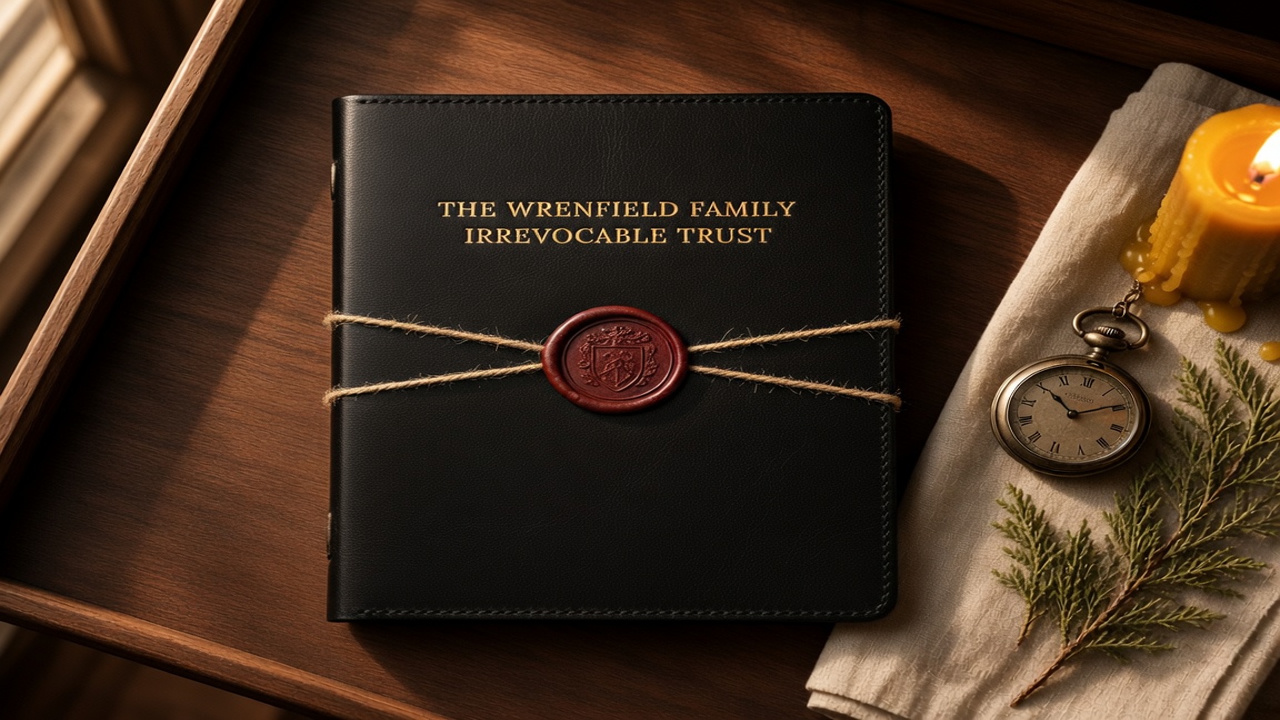
- We write it for your house. Thirty days, done for you, bound and delivered to you in beautiful heirloom grade, full-grain American leather. Expert artisan craftsmanship to last 1,000 years.
- Live in self-governing, private, familial dominion. Execute the documents, tailor it to your family by adding your custom family amendments, move your property into the trust and begin living in your new glorified estate.
Frequently asked questions
What is an irrevocable family trust?
It is a trust that cannot be cancelled or freely revoked once it is signed and funded. Assets are transferred into the trust and managed by trustees for the family's benefit, often across generations. It offers stronger protection from creditors and longer duration than a revocable trust.
Can I be the trustee of my own irrevocable trust?
In many designs, yes, and the Founding Settlors often serve as the first trustees. In The Spacious Place’s Dynasty Architecture, the family's own Wyoming Private Family Trust Company serves as the qualified Wyoming trustee: an unregulated Wyoming LLC, based in Wyoming, that is a separate entity from any family member, with family members as its managers.
Can an irrevocable trust ever be changed?
Yes. This is a common misconception. Irrevocable does not mean provisions can’t be amended. Many are drafted with tools such as a trust protector, decanting authority, or directed-trust provisions that allow thoughtful adjustments through the changing seasons of life and needed adjustments for successive generations. Modification can also be accomplished through beneficiary consent. An important element for a trust designed to last 1,000 years.
Does an irrevocable trust protect assets from creditors?
In the best designs: Yes. But protection is never automatic or guaranteed. If you are a beneficiary of a trust you created, your creditors may still reach it unless the design architecture and Spendthrift provision is ironclad, and transfers made to avoid existing creditors can be reversed.
How is an irrevocable family trust taxed?
It depends on design. Some jurisdictions seek to tax everything. Some are grantor trusts, taxed to the creator; others file their own returns. Wyoming is a wonderful haven for a Family Legacy Trust because it has no state income tax, capital gains tax, or inheritance tax for assets held in trust.
Can I put my house in an irrevocable trust?
Often yes, frequently through an LLC the trust owns. Before transferring a home, check with your lender, county assessor, homestead rules, and insurer.
Can I have an irrevocable family trust done for me?
Yes. The Legacy Folio is one irrevocable, Family Legacy Trust written for your house in thirty days. 100% family-controlled structure, with EIN, Wyoming trust address, and beneficiary certificates, wrapped in a beautiful heirloom-grade American leather folio, for $2,000. If you own digital assets or crypto, you can add a trust-owned Digital Asset LLC for just an additional $589. The total for the Legacy Folio with a Wyoming Digital Asset LLC is only $2,589 (only $2.58/year over 1,000 years).

Establish your everlasting house
The Dynasty Architecture · $6,500 all-in Three layers, one design: your private Family Legacy Trust, a Pass Through Trust, and your own Wyoming Private Family Trust Company & Digital Asset LLC, set up to serve as the family's permanent, qualified Wyoming trustee. Pure family control. Three leather-bound folios. Thirty days, done for you. One-time fee. Payment plans available through our third party partners.
The Legacy Folio + Wyoming Digital Asset LLC · $2,589 One irrevocable, family-controlled trust written for your house, with EIN, Wyoming trust address, and beneficiary certificates, plus a Wyoming Digital Asset LLC with registered agent, EIN, operating and custody agreements, and assignment of your digital assets into the trust. Bound in American full-grain leather. Thirty days, done for you. (Don’t need the Digital Asset, LLC? The Legacy Folio alone is $2,000.)
Not sure which fits your house? Request a family consultation →
Disclaimer
The Spacious Place provides education, trust architecture design, and document preparation only. This is not legal advice.
Scripture quotations are from the King James Version (public domain).